I’m sure you’ve heard of mock drafts. In many sports leagues, before teams pick their players in the real draft, there’s a lot of attention on how it might play out and which team might choose which player – via a mock draft. A mock lets you think through how the process might unfold, what the results might be and, of course, how to plan and prepare.
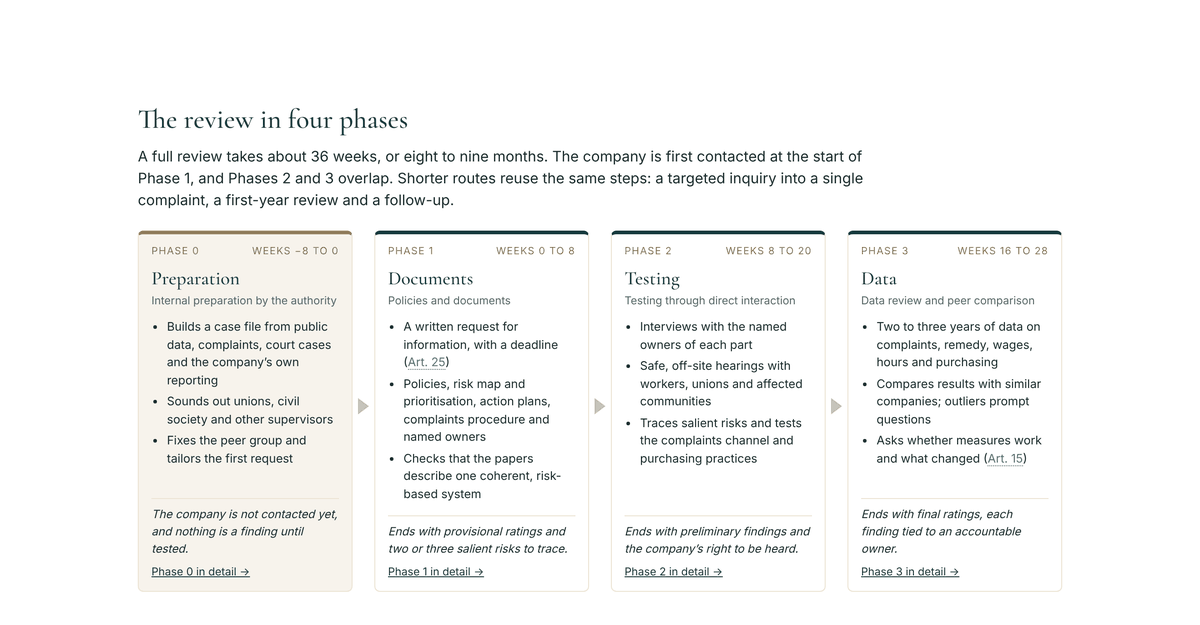
Well, I thought it would be interesting to apply the same idea to the EU’s Corporate Sustainability Due Diligence Directive (CSDDD) and ask how a competent authority – the national supervisor – might review the due diligence of a company in scope.
So, I’ve built a mock CSDDD review: a mock of what a supervisor might (or might not) do. It walks through how a review might run – from preparation to findings, different supervisor models, how evidence is weighted, five evaluative levels and a fictional worked example case. Pretty cool (or I think so, anyway)!
This is a mock, so by definition it’s speculation about what might happen – and I’ve thrown in some of my own views on how it might (should?!) play out. For example, if you’ve read this piece on what minimum compliance might look like, you might recognise the ideas of intentionality, proportionality and effectiveness that I’ve built into the approach.
As I said above – this is speculation, and there are a ton of caveats (not legal advice; a mock, not a forecast; errors and omissions; the law is still moving; a point in time … yada, yada – more on the Caveats page).
And yet, why is this interesting? As companies prepare for the CSDDD, they of course need to start with the Directive itself and the national laws that transpose it. But they might also want to think beyond the law, to how their efforts to implement it might be judged. That’s where the mock review comes in: it offers a glimpse of the other bookend. On one side sit the Directive and the national laws; on the other, the review of how a company has put them into practice.
Take a look and explore (there’s a lot in here). All feedback is most welcome!